Herniated disc after a car accident: symptoms, evaluation, and claim records

This article provides general medical and legal education. It does not diagnose an injury, recommend treatment, create an attorney-client relationship, or determine whether a collision caused a medical finding.
What a herniated disc is
Discs sit between the vertebrae of the spine. Each disc has a softer center and a tougher outer layer. MedlinePlus explains that a herniated disc occurs when disc material moves through a weakened or damaged part of the disc and may affect nearby nerves.
People use several terms for disc problems, including bulging, slipped, ruptured, or herniated disc. Those labels are not always interchangeable in medical records. The level of the spine, the wording of the imaging report, and the clinician's findings provide more useful information than a shorthand label.
A collision may be part of the history. Age-related change, prior symptoms, earlier injuries, work demands, and other conditions may also matter. The cause of one person's symptoms cannot be decided from an article or scan excerpt.
Symptoms depend on the disc and nerve involved
A disc problem in the lower back may be associated with pain that travels into a leg, along with tingling, numbness, or weakness. A problem in the neck can affect the shoulder, arm, hand, or fingers. Some disc findings cause little or no pain.
MedlinePlus describes symptom patterns that can involve the neck, shoulder, arm, lower back, or leg. The American Academy of Orthopaedic Surgeons explains how symptoms and a neurological examination can help identify a nerve affected in the lower back. Similar symptoms can come from muscles, joints, nerves, or other conditions, so a symptom list cannot establish the diagnosis.
Rensch & Rensch's guide to delayed neck symptoms after a collision addresses a separate timing question. A clinician should evaluate each new or changing symptom rather than relying on a general symptom list.
Seek prompt care for neurological warning signs
Seek emergency care for loss of bladder or bowel control, new or rapidly worsening weakness, loss of movement, or difficulty walking. Call emergency services if the person cannot be moved safely or needs immediate assistance.
Other post-crash symptoms may also require urgent evaluation, including severe head, chest, abdominal, or spinal pain; loss of consciousness; breathing difficulty; or a sudden change in function. A person should follow emergency and medical instructions for their situation rather than delaying care to gather evidence.
How clinicians evaluate a possible disc injury
Evaluation often starts with the collision history and symptom timeline. The clinician may ask where the pain travels, what makes it worse, whether numbness or weakness is present, and whether similar symptoms existed before the crash.
The examination may assess:
- Movement and positions that reproduce symptoms
- Strength in the affected arm or leg
- Sensation, reflexes, and walking
- Areas of tenderness and other possible injury sources
- Changes in bladder, bowel, or sexual function when relevant
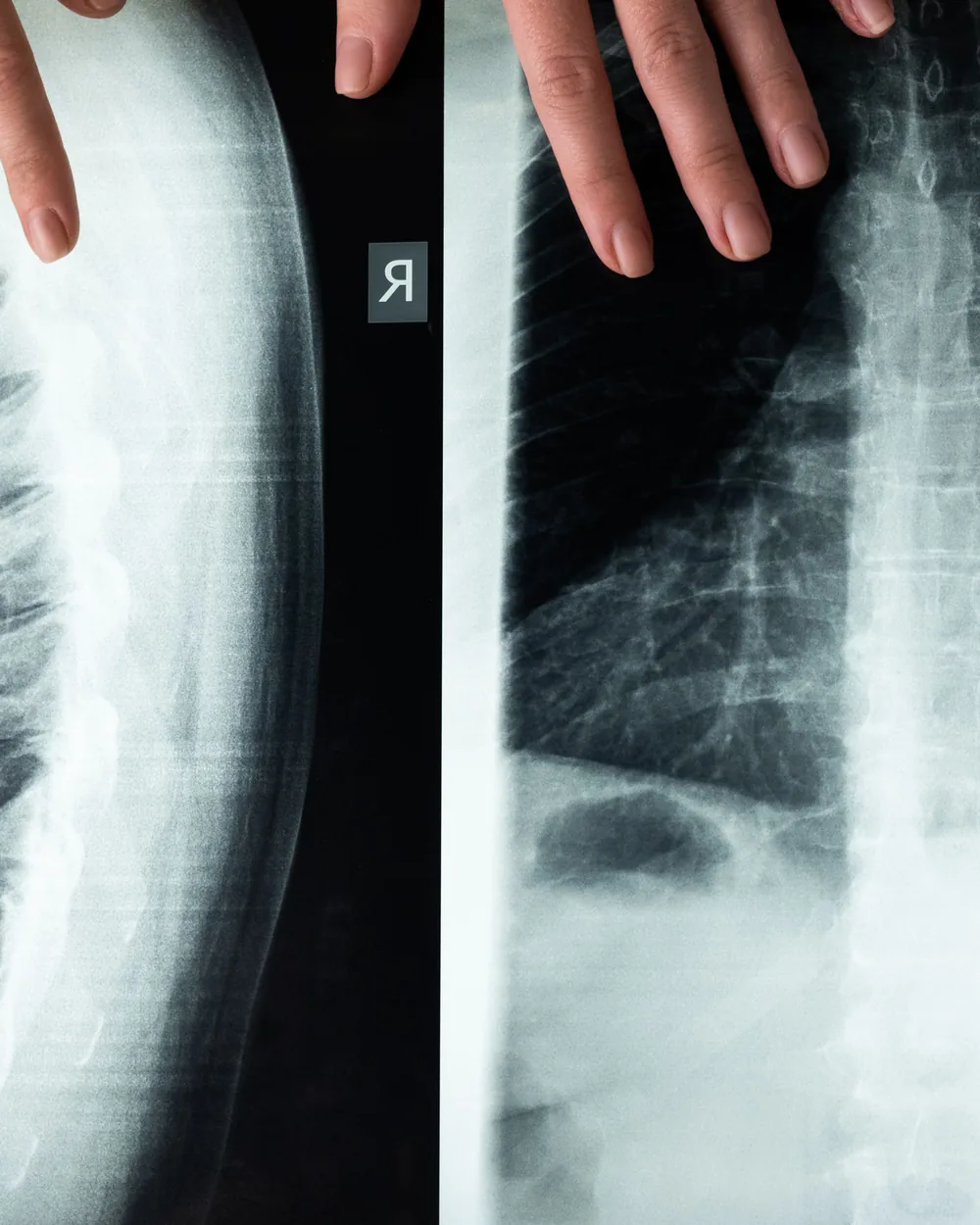
Imaging may be considered when the findings and medical judgment support it. MRI can show discs, nerves, and other soft tissues. CT, X-ray, or additional tests may answer different questions. The choice and timing belong to the treating clinician.
Why an MRI does not answer every causation question
An imaging report describes what appears on the scan. It does not automatically identify when a finding began, whether it causes the current symptoms, or whether a collision changed a pre-existing condition.
A peer-reviewed systematic review of spinal imaging findings found that degenerative findings are common among people without symptoms and become more frequent with age. The authors concluded that imaging findings need interpretation in the patient's clinical context.
That context can include prior records, earlier imaging, the onset and progression of symptoms, examination findings, how the injury occurred, and response to care. An appropriately qualified medical professional must address medical causation. A scan alone cannot resolve legal responsibility.
Records that can connect the medical and crash timelines
Clear records help the treating team understand what changed. They can also help an attorney evaluate what evidence exists. Keep accurate copies rather than relying on memory months later.
Useful records may include:
- Emergency, urgent-care, and follow-up visit summaries
- Clinical notes, referrals, restrictions, and therapy records
- Imaging reports and information about where the images are stored
- Medication lists and out-of-pocket medical receipts
- A factual symptom log with dates and activity limits
- Crash photographs, witness details, and insurer correspondence
- The police or agency crash report when one exists
The Nebraska Department of Transportation maintains official crash-reporting information. Rensch & Rensch also explains how to report and obtain information after an Omaha crash. Crash documentation and medical records serve different purposes, so preserve both.

How Nebraska fault rules may enter a claim
Medical causation and legal fault are separate questions. One asks whether and how the collision affected a medical condition. The other asks who acted negligently and how that conduct contributed to the crash.
Nebraska's comparative-negligence statute can reduce or bar recovery depending on the negligence attributed to the claimant and its comparison with the defendant's negligence. Applying that rule requires evidence about the collision and the parties. This article does not calculate percentages or predict a result.
Insurers may also question whether symptoms came from the crash, a prior condition, or another event. Complete prior and current records can help qualified medical professionals and attorneys address that issue accurately.
When legal advice may help
Consider legal advice when symptoms persist, work is affected, medical care continues, responsibility is disputed, or an insurer asks for a recorded statement, broad authorization, or settlement. An attorney can review the available crash evidence, coverage, medical documentation, and legal deadlines without directing medical treatment.
Rensch & Rensch provides Omaha car-accident legal guidance for injured people in Nebraska. Bring the crash report, photographs, insurance correspondence, and an organized list of medical providers to the consultation.
Free & Confidential · 2-Minute Estimate
Hurt in an accident? See what your claim could be worth.
Answer a few quick questions and get a case-value range based on the same factors insurance adjusters use. No obligation.
Find Out How Much Your Case Is Worth Now, For FREE