
Can Whiplash Symptoms Be Delayed After a Car Accident?

Feeling little pain at the crash scene does not establish whether an injury occurred. Symptoms can change as the hours pass, and several different injuries can cause neck pain, headache, dizziness, or sensory changes.
The safest response is to describe what happened and what you feel accurately to a licensed medical professional. A careful chronology also gives an attorney a clearer record if the crash later becomes part of an insurance claim or lawsuit.
Why whiplash symptoms can show up later
Whiplash describes a neck injury associated with rapid movement of the head. Rear-end crashes are a common setting, though a clinician must evaluate the actual event and symptoms before identifying an injury.
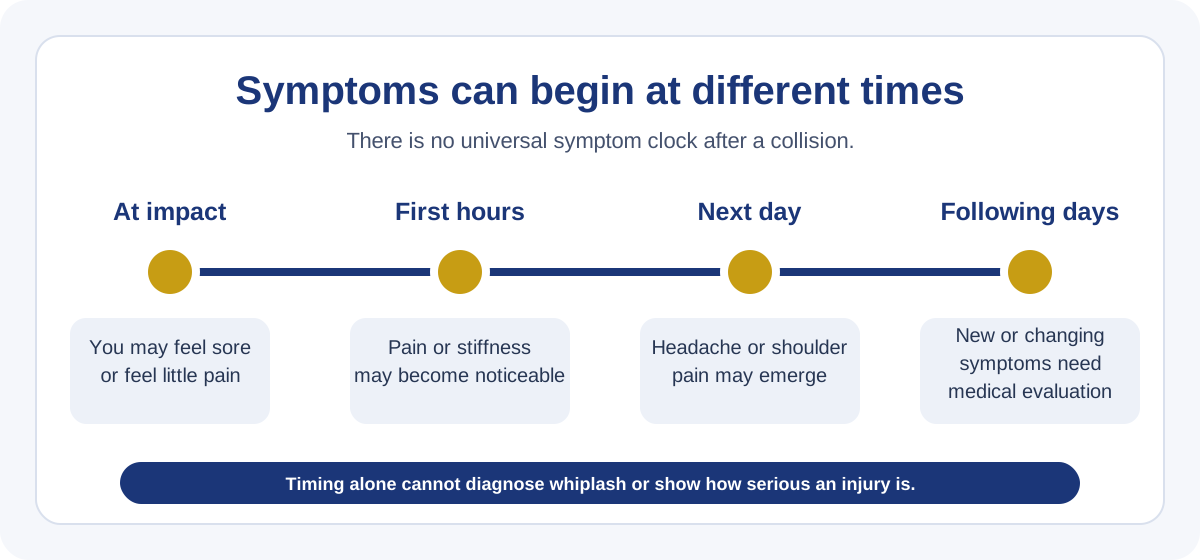
The medically reviewed WebMD guide to neck strain and whiplash explains that pain may begin immediately or take several hours or days to appear. A second WebMD whiplash guide states that symptoms may be delayed for 24 hours or more and often develop within the first few days.
There is no universal symptom clock. One person may notice neck stiffness before leaving the scene. Another may first feel pain that evening or after waking the next morning. The timing alone cannot identify the affected tissue, show how serious the condition is, or predict recovery.
Delayed pain also does not rule out another injury. A collision can involve the head, spine, shoulders, or nerves. A medical examination is necessary when symptoms appear, change, or worsen.
Symptoms to watch for after a crash
Whiplash can involve more than neck pain. The reviewed medical sources describe symptoms that may include:
- Neck pain, tenderness, tightness, or stiffness
- Reduced or painful neck movement
- Headache, including pain that starts near the base of the skull
- Shoulder or upper-back pain
- Dizziness or balance problems
- Tingling or numbness in an arm or hand
- Weakness
- Problems with concentration, memory, sleep, or vision
These symptoms are not a self-diagnosis. Headache, dizziness, numbness, weakness, or concentration changes can overlap with concussion, nerve injury, and other conditions. MedlinePlus also explains that physical trauma can damage nerves and that nerve problems may affect sensation, strength, balance, walking, or use of the arms and hands.
Tell the clinician when each symptom began, where you feel it, what makes it change, and whether it affects ordinary activities. Avoid deciding on your own that every new problem came from whiplash. The medical record should reflect the observations and the clinician's findings.
When delayed symptoms need urgent medical attention
Some symptoms after a crash can signal a problem more serious than a mild neck strain.
WebMD's reviewed neck-strain guidance warns that the same event can also involve a concussion. Its whiplash guidance advises medical evaluation for symptoms such as passing out, limb numbness or weakness, trouble swallowing, and trouble speaking.
This article cannot triage a reader or tell someone whether it is safe to wait. Call 911 when there is an immediate emergency. For other new or worsening symptoms after a collision, contact a licensed medical professional for advice based on the actual circumstances.
Rensch & Rensch also maintains information about traumatic brain injury claims after motor vehicle accidents. That legal resource does not replace emergency or clinical care.
How clinicians evaluate delayed neck pain
A medical professional may begin with the crash history and symptom timeline. Be ready to explain the date and time of the collision, how the impact occurred, whether your head struck anything, and when each symptom first became noticeable.
The physical examination may include neck movement, areas of tenderness, strength, sensation, and reflexes. The clinician may also look for signs that point away from a simple neck strain. WebMD notes that X-rays, CT scans, or MRI may be used in some cases to rule out fractures, displacement, or other concerns. The correct examination and testing depend on the individual patient.
Imaging does not serve the same purpose in every case, and a scan is not automatically required because pain began late. The treating professional decides which tests are appropriate. Follow the clinician's instructions and ask questions when the diagnosis, restrictions, or follow-up plan is unclear.
Accurate information about prior neck, back, headache, or neurological problems matters. A preexisting condition does not explain every new symptom, and leaving it out can make the medical history less useful. Tell the clinician what was present before the crash, what changed afterward, and when the change occurred.
How to document symptoms that begin later
A reliable record starts with dates, observations, and original documents. It should show the timeline without exaggeration.
| Point in time | What to record | Why it helps |
|---|---|---|
| At or soon after the crash | Date, time, location, impact details, emergency response, and how you felt | Preserves the starting point, including the absence of immediate symptoms |
| When symptoms begin | Date and approximate time, body area, type of symptom, and activity at onset | Creates a specific chronology instead of a later estimate |
| During medical care | Appointment dates, reported symptoms, examination findings, diagnosis, restrictions, and follow-up | Connects the timeline with professional records |
| During recovery | Changes in symptoms, missed work, activity limits, and further care | Shows how the condition developed over time |
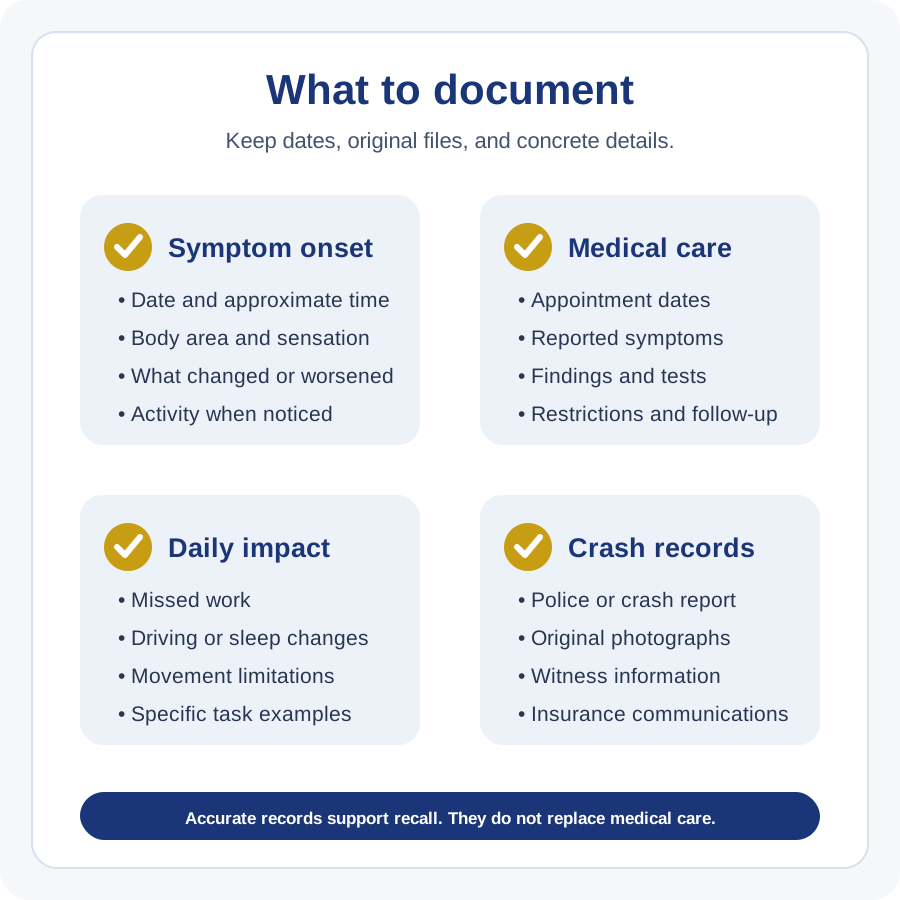
Useful records may include:
- Police or crash reports and exchange information
- Photographs of the vehicles, scene, and visible injuries
- Medical records, visit summaries, referrals, and test reports
- A dated symptom log written as events occur
- Work schedules, absence records, and written restrictions
- Receipts and insurance communications
- Names and contact details for witnesses
- Records of relevant symptoms or treatment from before the crash
Describe function with concrete examples. A note that the person could turn to the right before the crash and could not look over that shoulder without pain on Tuesday is more useful than a broad statement that everything hurt.
Keep original photographs, messages, and documents. Do not edit a record to make it appear stronger. A symptom log should support accurate recall and should never replace medical records or professional evaluation.
The firm's current guide to steps after a car, truck, or motorcycle accident provides broader post-crash information.
Can delayed symptoms affect a Nebraska injury claim?
The time between a crash and the first reported symptom can become a disputed issue. An insurer may ask whether the collision caused the condition, whether another event occurred, or whether a prior condition explains part of the complaint.
No single document answers those questions. Medical history, examination findings, diagnostic evidence, crash facts, prior health records, witness information, and the consistency of the timeline may all matter. A treating professional addresses medical diagnosis and causation within the professional's role. A Nebraska attorney evaluates the legal evidence and the applicable claim.
Delayed symptoms should be reported truthfully. A person who felt fine at the scene should say so. If stiffness began that evening and arm tingling began the next morning, record those details instead of moving every symptom back to the moment of impact.
Seeking care has a health purpose. The resulting records can also preserve what the patient reported and what the clinician observed close to the relevant time. Those records do not guarantee that an insurer or court will accept a particular causation theory.
Avoid giving a recorded statement about diagnosis, prognosis, or fault when you do not yet know the answer. Preserve the request and obtain case-specific advice if you are unsure about an insurer's questions or authorization forms.
Nebraska deadlines and the risk of waiting
Nebraska Revised Statute 25-207 provides a four-year period for specified actions involving injury to a person's rights. That language is often relevant to personal injury matters. It does not safely calculate the deadline for an individual motor vehicle claim.
The applicable deadline can depend on the legal theory, defendant, age or legal status of the injured person, government involvement, when the claim accrued, and other rules. Contractual notice duties and insurance requirements may also operate on a different timetable. The firm's Nebraska personal-injury deadline guide compares several statutory rules and exceptions, but Nebraska counsel must verify the current statutes and facts.
Waiting can create practical problems even when a filing deadline has not expired. Vehicles may be repaired, digital records may be overwritten, witnesses may become difficult to locate, and memories may fade. Medical questions can also become harder to reconstruct without a contemporaneous record.
Do not postpone medical care for a legal strategy. Address health concerns with a licensed clinician. Ask a Nebraska attorney to identify the legal deadlines and evidence-preservation steps for the actual case.
When to speak with an Omaha car accident lawyer
Consider legal advice when delayed symptoms require medical care, interfere with work or daily activity, or lead to questions about insurance, fault, records, or deadlines. Bring an accurate chronology, crash report, photographs, medical information, work records, witness details, and insurer communications to the consultation.
Rensch & Rensch's page about Omaha car accident representation explains the firm's current service. You can also review the firm's other injury articles before deciding what questions to ask.
This article provides general medical and legal information. It does not diagnose an injury, create an attorney-client relationship, or replace advice from a licensed clinician or Nebraska attorney.
Sources
- WebMD: Neck Strain and Whiplash
- WebMD: Whiplash (Neck Strain)
- NIH MedlinePlus: Peripheral Nerve Disorders
- Nebraska Legislature: Nebraska Revised Statute 25-207
Free & Confidential · 2-Minute Estimate
Hurt in an accident? See what your claim could be worth.
Answer a few quick questions and get a case-value range based on the same factors insurance adjusters use. No obligation.
Find Out How Much Your Case Is Worth Now, For FREE