Whose Insurance Pays in a Multi-Car Accident in Nebraska?
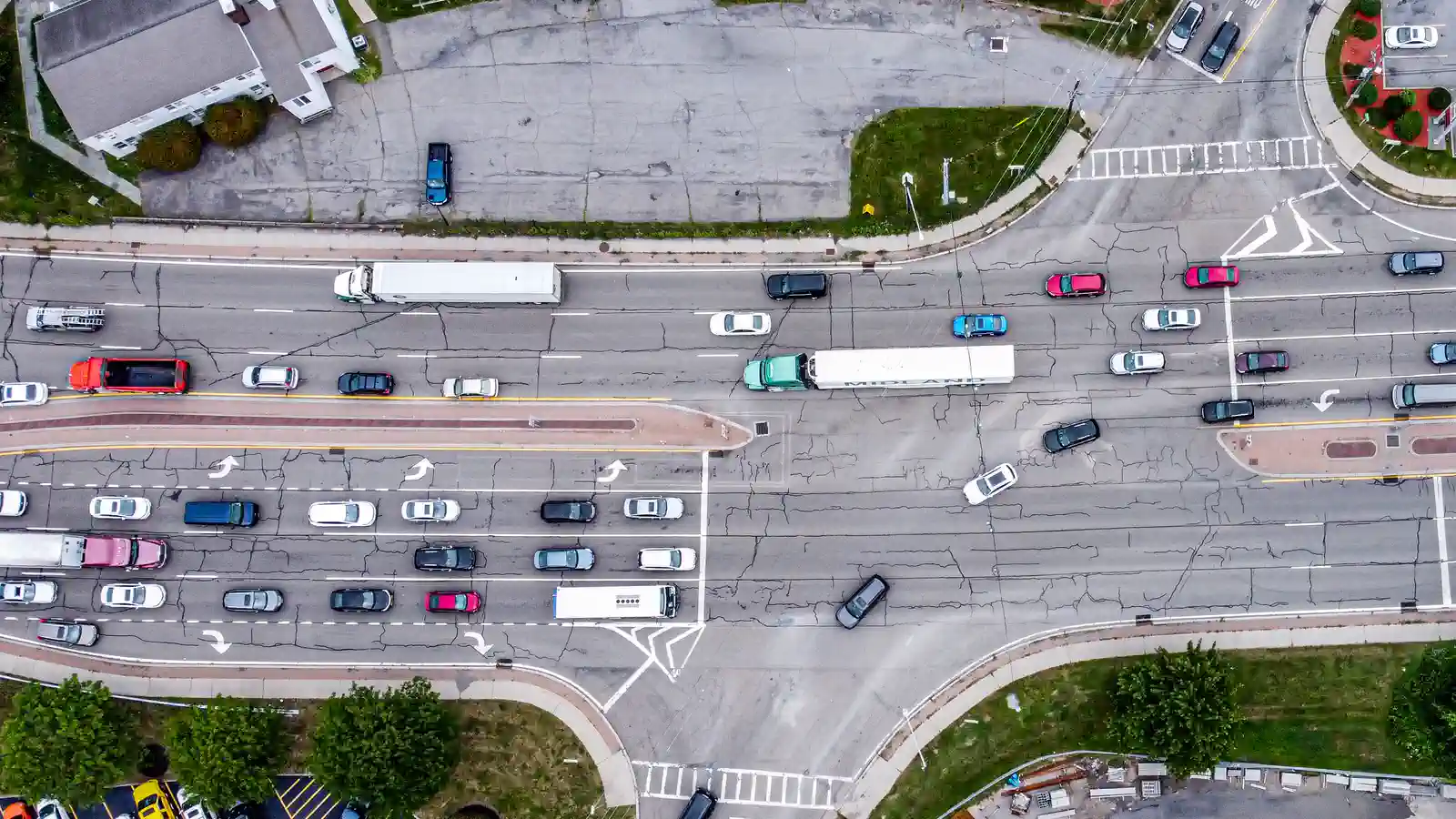
A crash involving three or more vehicles can produce several claims and conflicting accounts. Evidence about each driver's actions helps identify which policy may cover a particular injury or item of property damage.
This article provides general legal and insurance information. It does not interpret a policy, decide fault, create an attorney-client relationship, or provide advice for a specific claim.
Start with fault, then examine coverage
Liability coverage may pay covered bodily-injury losses sustained by other people or damage to others' property when an insured is legally responsible, subject to the policy's terms and limits. Fault and coverage require separate review. The identity of the first vehicle to make contact does not always answer either question.
For example, evidence may show that one driver caused an initial collision while another driver followed too closely or entered the same hazard without reasonable care. A vehicle may also be pushed into another vehicle without its driver contributing to the crash. Each driver's conduct needs a separate review.
Useful claim information may include vehicle and witness information; photographs or a diagram of the scene; the time, location, weather, road conditions, and visible skid marks; and the responding officer and crash-report information. A crash report is one item of evidence and does not, by itself, decide legal fault.
An insurer may accept responsibility, dispute it, or keep investigating. Its position does not by itself decide legal responsibility, which depends on the evidence and the law that applies to each person and claim.
Why more than one driver and insurer may be involved
Nebraska statutes address two distinct questions. Nebraska Revised Statute 25-21,185.09 addresses how a claimant's own negligence may affect recovery; the firm's comparative-negligence guide explains that threshold. Nebraska Revised Statute 25-21,185.10 addresses liability in actions involving multiple defendants.
Those statutes do not, by themselves, determine fault percentages for a particular crash or establish that an insurance policy covers a particular loss. Fault, causation, damages, and insurance coverage remain separate questions.
If evidence supports potential legal responsibility by multiple drivers, one or more insurers providing potentially applicable liability coverage may investigate and take positions. The existence and scope of coverage need separate confirmation, and an investigation does not establish that payment is owed. A carrier may also dispute the cause or extent of claimed injuries or property damage.
Which insurance coverages may enter the claim
The Nebraska Department of Insurance coverage guide describes several parts of an auto policy. Their possible roles are different.
| Coverage | What it may address | Important boundary |
|---|---|---|
| Bodily-injury or property-damage liability | Covered bodily injury to other people or damage to others' property for which an insured is legally responsible | The facts, policy terms, exclusions, and applicable limits control; coverage and payment are not automatic |
| Collision | Damage to the insured vehicle from a collision | A deductible and other policy terms may apply |
| Medical Payments | Treatment expenses for people who qualify under the applicable policy, which may include the policyholder and passengers | Who qualifies, which expenses are covered, and the available limit depend on the policy |
| UM/UIM | Certain bodily-injury losses when a responsible driver lacks enough applicable insurance | It does not automatically apply, and the cited description does not cover vehicle damage |
Several coverages may be examined after the same event. A driver might use collision coverage for vehicle repairs while liability insurers investigate fault. Medical Payments coverage may address covered treatment for people who qualify under an applicable policy. Uninsured or underinsured motorist coverage under an applicable policy may become relevant to certain bodily-injury losses if a legally responsible driver has no liability insurance or insufficient liability coverage.
The applicable policy and facts control. Review what losses are covered or excluded, the applicable limits, and any deductible. A general article cannot determine whether a particular person, vehicle, loss, or claim is covered.
Evidence that can separate the impacts and claims
Safety and medical care come before documentation. Call 911 if someone is injured. If a vehicle is drivable, move it out of traffic when safe and follow the responding officer's directions. Do not enter active traffic or delay care to gather evidence.
In a chain-reaction crash, small details may help establish when each impact happened and which damage is associated with it. The Nebraska Department of Insurance recommends collecting information about the drivers, insurers, vehicles, witnesses, scene, photographs, and responding officer in its auto-claim guidance. The National Association of Insurance Commissioners offers similar claim-record guidance.
Useful records may include:
- Each involved driver's name, contact, insurer, and vehicle information
- The date, time, exact location, weather and road conditions, scene photographs or a diagram, and visible skid marks
- Witness names and contact information
- The responding officer's name, badge number, contact information, report number, and instructions for obtaining the report
- The policy and forms or documents requested by the insurer
- Dated notes of conversations with the agent or adjuster and written explanations of disputed decisions
Keep the photographs and dated claim-communication notes you collect. In any account, distinguish what you directly observed from estimates or matters you do not know. If an earlier statement was inaccurate, correct it truthfully. Accuracy and a clear statement of uncertainty are more useful than unsupported certainty.

What happens when insurers disagree
Insurers may disagree about the impact sequence, whether a driver acted negligently, or which impact caused particular damage. They may also dispute whether the crash caused an injury or whether a policy covers the person or vehicle involved. When multiple bodily-injury claims implicate the same policy, its applicable per-accident limit may be insufficient to cover all claimed losses.
If you question a claim decision, ask the insurer or adjuster for a written explanation and keep dated notes of communications. The firm's general insurance-claim guidance discusses broader communication and documentation concerns.
A denial or settlement position may reflect the carrier's view of responsibility, claimed losses, or coverage. An adjuster's payment position does not by itself decide legal fault, and different carriers can take different positions on the same evidence.
When legal review may help
Case-specific review may be useful when multiple insurers dispute responsibility or coverage, or when applicable policy limits may be insufficient for all claimed losses.
An attorney can review the available evidence, identify the people and policies that may require investigation, and interpret Nebraska law without promising that a carrier will pay. Rensch & Rensch provides Omaha car-accident guidance for injured people and families in Nebraska.
Bring the crash report, photographs, witness information, policy documents, claim correspondence, and other records you already have to the review. Complete records can make the points of disagreement easier to identify, although they may not resolve fault or coverage on their own.
This article provides general legal and insurance information. It does not create an attorney-client relationship or replace advice from a Nebraska attorney who has reviewed the crash, policies, and current law.
Sources
- Nebraska Legislature: Nebraska Revised Statute 25-21,185.09
- Nebraska Legislature: Nebraska Revised Statute 25-21,185.10
- Nebraska Department of Insurance: Important of Auto Insurance and Types of Coverage
- Nebraska Department of Insurance: What to Do in Accident and How to File an Auto Claim
- National Association of Insurance Commissioners: What You Should Know About Filing an Auto Claim
Free & Confidential · 2-Minute Estimate
Hurt in an accident? See what your claim could be worth.
Answer a few quick questions and get a case-value range based on the same factors insurance adjusters use. No obligation.
Find Out How Much Your Case Is Worth Now, For FREE