
Amputation After a Car Accident: Treatment, Recovery, and Claim Records

This article provides general medical and legal information. It does not diagnose an injury, recommend treatment, calculate a deadline or claim value, or replace advice from a licensed clinician or Nebraska attorney.
What traumatic amputation means after a collision
MedlinePlus defines traumatic amputation as the loss of a body part because of an accident or injury, and it identifies motor-vehicle accidents as one possible cause. An amputation may be complete or partial. MedlinePlus also identifies severe accidental trauma as one reason a leg or foot may be removed surgically.
This is a medical emergency. Call 911 and follow emergency instructions rather than relying on an article for first aid. Emergency teams may also need to assess bleeding, shock, infection risk, and other injuries that are not immediately obvious.
Recovery follows an individual plan
There is no standard recovery calendar. The level of the amputation, other crash injuries, wound healing, additional surgery, pain, general health, and personal goals can all affect the plan. Recovery can involve wound care, movement and strength work, help with daily activities, prosthetic evaluation, pain care, and emotional support.
A prosthesis may be considered after sufficient healing, but the timing, device, fit, and usefulness differ from person to person. MedlinePlus explains that learning to use an artificial limb takes time and that physical therapy can help with adaptation. No device or therapy guarantees a particular level of function.
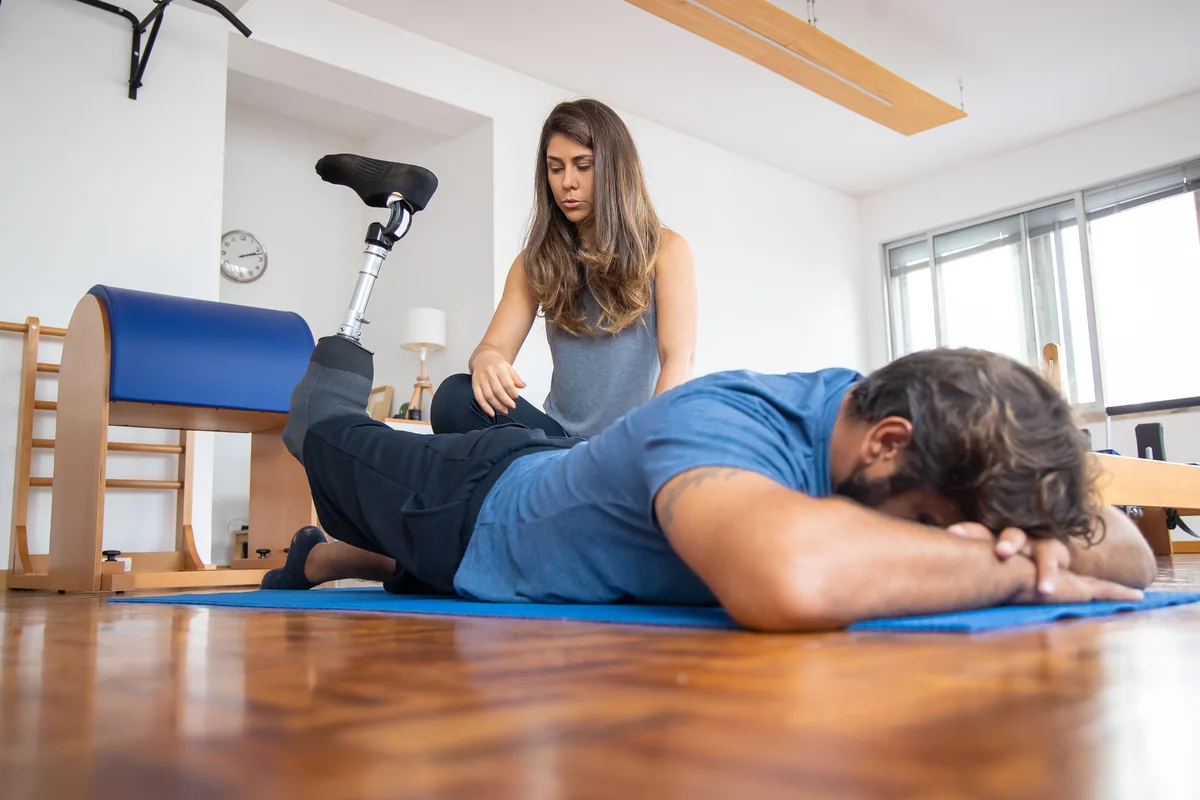
Emotional recovery also matters. Sadness, anger, and frustration can accompany limb loss. A patient should discuss physical or emotional concerns with the appropriate member of the care team.
Phantom sensation and phantom pain are not the same
Some people feel as though the missing limb is still present. The Veterans Health Library distinguishes phantom sensation from phantom pain: phantom sensation can include a painless itch or tickle, while phantom pain describes painful sensations perceived in the missing limb. Not everyone has phantom pain.
Treatment decisions belong to the person's clinicians. When documenting symptoms, note when they were reported, what providers observed, and what care they recommended. Do not assume that one person's experience is universal.
What a Nebraska injury claim must establish
An amputation documents the seriousness of an injury, but it does not answer every legal question. A claim may still require proof of who caused the crash and whether the collision caused the limb injury or later surgery. The applicable policies and each claimed loss also need supporting documentation.
Medical causation can be especially important when the amputation occurred after attempts to save the limb or when another health condition affected healing. Operative reports, imaging, specialist notes, and a clear timeline can help qualified professionals evaluate those questions. Records support analysis; they do not promise liability or recovery.
Records that can show what changed
Keep complete, accurate copies when possible. Useful records may include:
- The crash report, scene photographs, witness details, and insurer correspondence
- EMS, emergency, hospital, surgical, imaging, and discharge records
- Records of infection, wound healing, revision surgery, pain, and follow-up care
- Physical and occupational therapy notes, prosthetic evaluations, and device records
- Bills, receipts, insurance explanations, and transportation expenses
- Pay records, missed-time documentation, job duties, and written work restrictions
- Estimates or recommendations for future care, equipment, home changes, or vehicle changes
- A dated account of specific functional changes, such as dressing, driving, using stairs, or completing a work task
Describe facts without guessing or exaggerating. Preserve original files and avoid posting medical or claim details publicly. Rensch & Rensch explains how to preserve the crash report and related scene information in a separate guide.

Future needs require careful support
Current bills may not show the full effect of limb loss. Clinicians may identify expected follow-up care, rehabilitation, equipment, prosthetic care, or help with daily activities. Pay and employment records can document how the injury affected work. Written recommendations and estimates can preserve those details without assuming they will be needed or legally recoverable.
Medical providers and other qualified professionals must explain future needs within their expertise. A Nebraska attorney must separately evaluate which claimed losses the law may allow and what proof they require. A general article cannot supply those opinions or estimate a person's losses.
Insurance and fault can affect the analysis
The Nebraska Department of Insurance warns that the state's required minimum auto coverages may not cover all damage. Available coverage depends on the applicable policies, their terms, and the facts. Minimum limits are not a prediction of recovery.
In negligence claims governed by Nebraska's comparative-negligence statute, the claimant's share of fault can reduce or bar recovery. The firm's guide to Nebraska's comparative-negligence rule explains that separate issue. An insurer may state its own view of fault. Understand the evidence and consequences before agreeing to settle or signing a release.
When legal review may help
Prompt review can help identify potential parties and policies, preserve vehicle and electronic evidence, request records, and track deadlines. This can matter when treatment is continuing and future needs are not yet clear. Deadlines vary with the parties, legal claims, and circumstances.
Rensch & Rensch provides Omaha catastrophic-injury guidance for people facing life-changing injuries. Bring the crash information, medical timeline, insurer communications, work records, and a list of current providers to a consultation.
This article is general information only. It does not create an attorney-client relationship or replace individualized medical or legal advice.
Sources
- MedlinePlus: Traumatic amputation
- MedlinePlus: Limb loss
- MedlinePlus: Leg or foot amputation
- U.S. Department of Veterans Affairs: Phantom Sensation and Phantom Pain After Amputation
- Nebraska Legislature: Nebraska Revised Statute 25-21,185.09
- Nebraska Department of Insurance: Important of Auto Insurance and Types of Coverage
Free & Confidential · 2-Minute Estimate
Hurt in an accident? See what your claim could be worth.
Answer a few quick questions and get a case-value range based on the same factors insurance adjusters use. No obligation.
Find Out How Much Your Case Is Worth Now, For FREE